
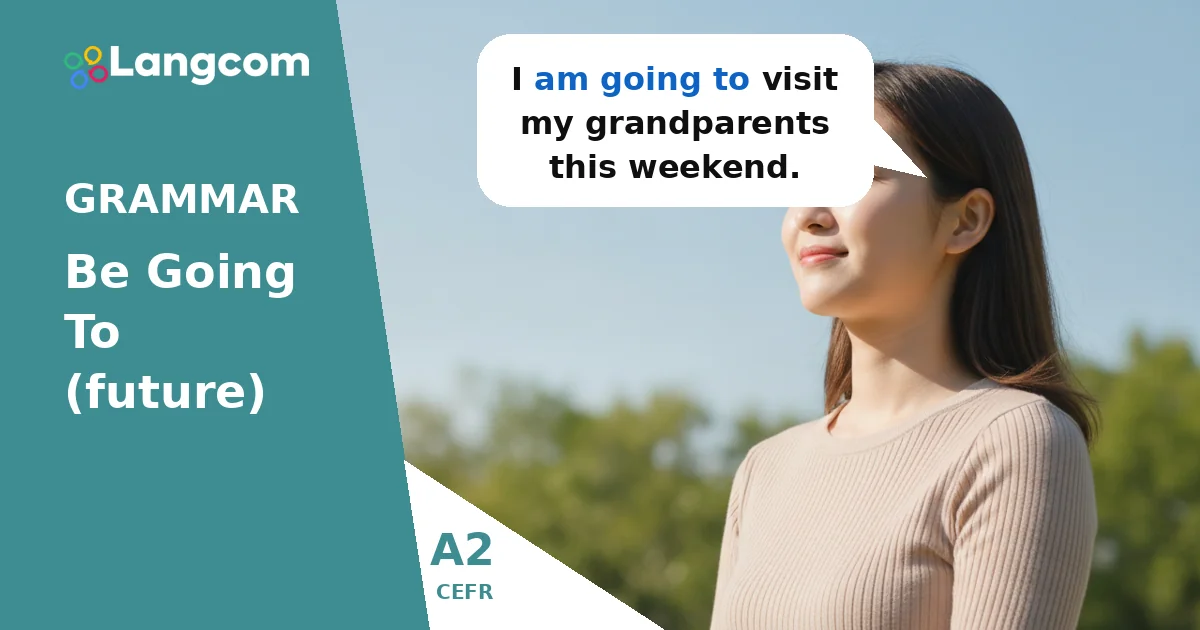

What does “be going to” mean?
Be going to is a common way to talk about the future in English. It helps us express things that are already decided or very likely to happen.
Think of it as looking forward and seeing what is coming next. It is often about your personal decisions or things you can see happening soon.
- نحن نستخدم be going to for plans and intentions. These are things you have already decided to do.
- كما أننا نستخدم be going to for predictions when you have clear evidence now. You can see or feel something that tells you about the future.
🎓 تعلم اللغة الإنجليزية باستخدام الطريقة المختلطة
مجموعات صغيرة · مدرس ذكاء اصطناعي متاح على مدار الساعة · التحضير لامتحانات كامبريدج
خطط من $39 $79 في الشهر
How do we form “be going to”?
The structure for be going to is easy to remember. You need the verb to be, then going to, and finally the main verb in its base form.
Affirmative (Positive) Sentences:
- Use: Subject + am/is/are + going to + base verb
- مثال: I am going to read a book tonight.
- مثال: She is going to learn Spanish.
Negative Sentences:
- Use: Subject + am/is/are + not + going to + base verb
- مثال: They are not going to come to the party.
- مثال: He isn’t going to finish his homework.
Questions:
- Use: Am/Is/Are + Subject + going to + base verb?
- مثال: Are you going to travel next summer?
- مثال: Is it going to rain later?
Short Answers:
- Yes, I am. / No, I’m not.
- Yes, he is. / No, he isn’t.
- Yes, they are. / No, they aren’t.
When do we use “be going to”?
There are two main situations when we use be going to:
1. Plans and Intentions
الاستخدام be going to for things you have already decided to do. These are your plans for the future.
- We are going to buy a new car next month. (They have decided this.)
- I’m going to start a new job on Monday. (This is a firm plan.)
- What are you going to do this weekend? (Asking about plans.)
2. Predictions Based on Evidence
الاستخدام be going to when you can see or know something now that tells you what will happen in the future.
- Look at those dark clouds! It’s going to storm. (The clouds are the evidence.)
- She’s driving too fast. She’s going to crash! (Her driving is the evidence.)
- My team is playing very well. They are going to win the game. (Their good play is the evidence.)
| الموضوع | <span data-no-translation>Be</span> Verb | <span data-no-translation>Going To</span> | الفعل الرئيسي | Example |
|---|---|---|---|---|
| I | am | going to | study | I am going to study English. |
| You/We/They | are | going to | eat | They are going to eat pizza. |
| He/She/It | is | going to | play | He is going to play football. |
أمثلة
- I am going to visit my grandparents this weekend.
- She is not going to eat meat anymore.
- Are they going to study for the exam tonight?
- It’s 9 o’clock! We are going to be late.
- He is going to learn to play the guitar.
- My sister is going to have a baby in July.
التدريب
💬 هل تحتاج إلى إرشادات مخصصة؟
بصفتنا مركزًا معتمدًا للتحضير لاختبارات كامبريدج، يمكننا توجيهك نحو الدورة والشهادة المناسبتين لك. تحدث مع مستشارينا اليوم.
دردش مع مستشار على واتسابالأخطاء الشائعة لدى المتحدثين باللغة الإسبانية
Spanish speakers sometimes make specific mistakes with be going to:
- Forgetting the verb to be: You might say I going to study. This is incorrect. Remember to always include am, is, ، أو are. The correct form is I am going to study.
- Forgetting to before the main verb: Sometimes learners say She is going play tennis. This is incorrect. You need to before the base verb. The correct form is She is going to play tennis.
- مربك be going to مع will for plans: In Spanish, you often use one form for future. In English, be going to is for plans you have already made, while will is for decisions made at the moment of speaking or general predictions. For example, for a plan, say I am going to travel next year (correct), not I will travel next year (less common for a pre-decided plan).
الأسئلة الشائعة
What is the main use of ‘be going to’?
The main use of be going to is to talk about future plans and intentions that you have already decided. For example, I am going to clean my room tomorrow.
Can I use ‘will’ instead of ‘be going to’ for plans?
No, not usually for plans you have already made. Be going to is for pre-decided plans. Will is for decisions made at the moment of speaking or general future facts. For example, I am going to buy a new phone (plan) is different from I will buy a new phone (decision now).
Is ‘gonna’ the same as ‘going to’?
Gonna is a very informal spoken form of going to. You will hear it often in casual conversations, but it is not used in formal writing or speech. For example, I’m gonna eat pizza means I am going to eat pizza.
How do I make a negative sentence with ‘be going to’?
To make a negative sentence, you put not after the verb to be (am/is/are). For example, She is not going to watch TV tonight, ، أو They aren’t going to play outside.

0 تعليق