
投稿者 ラウル | 7月 28, 2026 | A1 英語(初級)
For ‘he’, ‘she’, and ‘it’ in positive Present Simple sentences, we add -s to the verb. This is a very important rule for talking about daily routines, habits, and facts related to one person or thing. For example, He works in an...

投稿者 ラウル | 7月 28, 2026 | A2 Key (KET)
The phrase going to has two common pronunciations in English: the full, clear version and a faster, reduced version that sounds like gonna. Understanding and using both will help you speak more naturally and understand native speakers better. The full pronunciation,...
投稿者 ラウル | 7月 28, 2026 | B2 中上級英語
Adjectives with negative prefixes like un-, in-, dis-, im-, il-, and ir- change the meaning of a word, often making it the opposite. These prefixes attach to the beginning of an adjective to create a new word with a contrasting sense. For example, happy becomes...
投稿者 ラウル | 7月 26, 2026 | A2 Key (KET)
In English, you can talk about the future using will, the present continuous, or the present simple, but each has a different use. We use will for predictions about the future or for decisions we make right now. For example, I think it will rain tomorrow.We use the...
投稿者 ラウル | 7月 26, 2026 | A2 Key (KET)
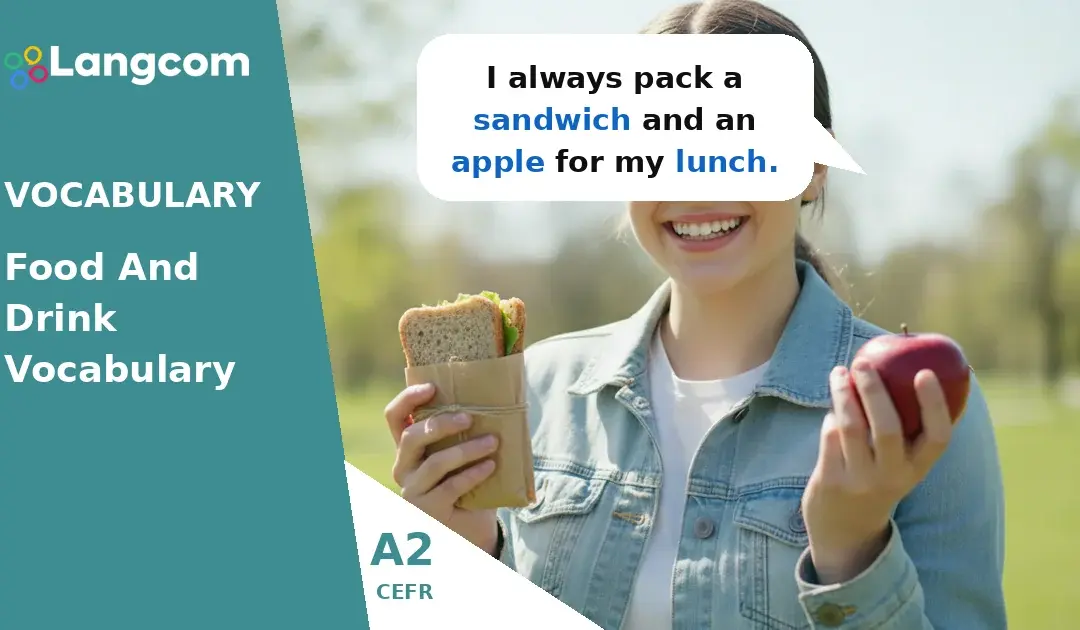
Learning English words for food and drink is very important for everyday conversations, especially when talking about meals like lunch. A lunch box is a special container used to carry food, often to school or work. Knowing the names of common items you might find...
