

What are common A1 cooking verbs?
When we cook, we do many different actions. In English, we use specific verbs for these actions. These verbs help us understand how food is prepared.
- Bake: To cook with dry heat, usually in an oven.
- Boil: To cook food in very hot water.
- Fry: To cook food in hot oil or fat, usually in a pan.
- Grill: To cook food using direct heat, often on a metal rack.
- Roast: To cook food in an oven with oil, usually meat or vegetables.
🎓 Englisch lernen mit der Blended-Methode
Kleingruppen · KI-Tutor rund um die Uhr · Vorbereitung auf die Cambridge-Prüfungen
Pläne von $39 $79 pro Monat
When do we use 'bake'?
Wir verwenden bake when we cook food in an oven using dry heat. We often bake things like bread, cakes, and cookies.
- I want to bake a cake for my birthday.
- She bakes fresh bread every Sunday.
When do we use 'boil'?
Wir verwenden boil when we cook food in very hot water. The water gets hot and makes bubbles. We often boil pasta, eggs, or vegetables.
- Please boil some water for the tea.
- He likes to boil eggs for breakfast.
When do we use 'fry'?
Wir verwenden fry when we cook food in a pan with hot oil or fat. This makes the food crispy and brown. We often fry eggs, bacon, or potatoes.
- Let's fry some chicken for dinner.
- She likes to fry vegetables with rice.
When do we use 'grill'?
Wir verwenden grill when we cook food using direct heat. This can be under a hot element in the kitchen or over hot coals outside (like a barbecue). We often grill meat, fish, or vegetables.
- We will grill burgers for the party.
- Can you grill the fish for five minutes?
When do we use 'roast'?
Wir verwenden roast when we cook food in an oven, often with some oil. We usually roast larger pieces of meat or root vegetables. This makes them tender inside and crispy outside.
- My mother likes to roast a chicken on Sundays.
- We can roast potatoes with the meat.
| Verb | Was das bedeutet | What you cook |
|---|---|---|
| Bake | Cook in an oven (dry heat) | Bread, cakes, cookies |
| Boil | Cook in hot water | Pasta, eggs, vegetables |
| Fry | Cook in hot oil/fat in a pan | Eggs, bacon, potatoes |
| Grill | Cook with direct heat (e.g., BBQ) | Chicken, fish, burgers |
| Roast | Cook in an oven with oil | Meat (chicken, beef), root vegetables |
Beispiele
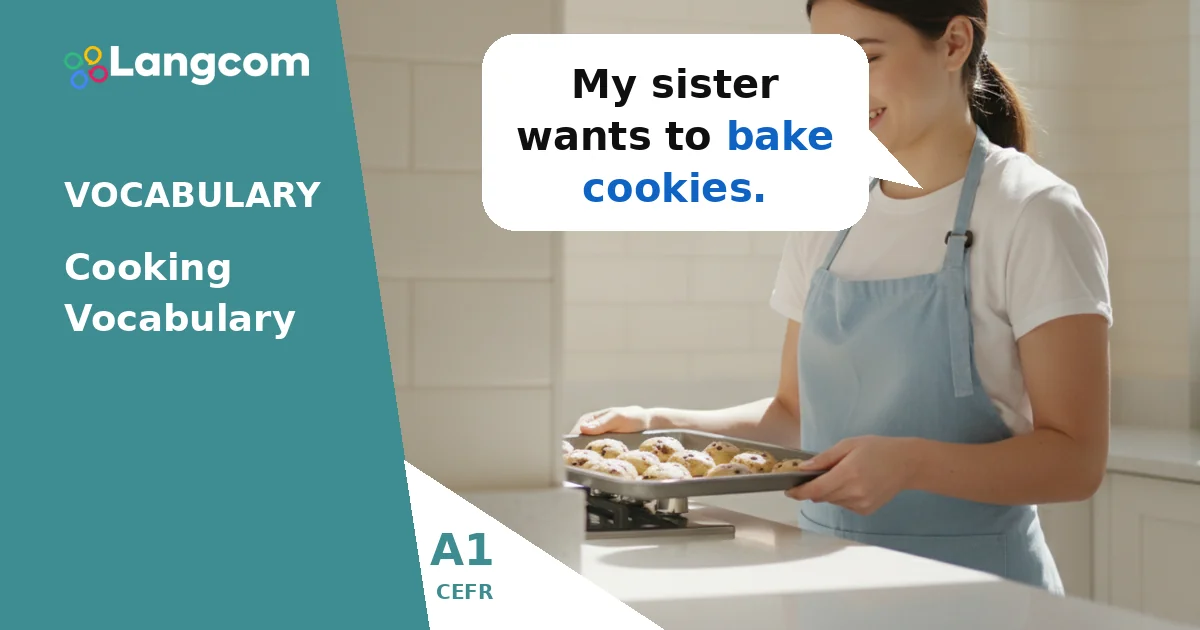
- My sister wants to bake cookies.
- Don't forget to boil the pasta.
- I will fry an egg for you.
- Let's grill some sausages.
- They like to roast vegetables in the oven.
Übung
💬 Benötigen Sie eine individuelle Beratung?
Als autorisiertes Cambridge-Vorbereitungszentrum können wir Ihnen helfen, den richtigen Kurs und die passende Zertifizierung zu finden. Chatten Sie noch heute mit unseren Beratern.
Chatten Sie mit einem Berater auf WhatsAppHäufige Fehler bei Spanischsprechern
Spanish speakers sometimes confuse bake, roast, und grill because the Spanish verb asar can mean all three. Remember these differences:
- Verwendung bake for bread, cakes, and pastries (no oil, dry heat in oven). Incorrect: I roast a cake. Correct: I bake a cake.
- Verwendung roast for meat or vegetables in the oven, usually with oil. Incorrect: I bake chicken. Correct: I roast chicken.
- Verwendung grill for cooking with direct heat, often on a barbecue or under a broiler. Incorrect: I roast fish on the BBQ. Correct: I grill fish on the BBQ.
Häufig gestellte Fragen
What is the main difference between 'bake' and 'roast'?
Beides bake und roast use an oven. You usually bake things like bread or cakes without oil. You usually roast meat or vegetables, often with oil, to make them brown and tender.
Can I 'fry' vegetables?
Yes, you can definitely fry vegetables! Many people fry onions, peppers, or mushrooms in a pan with a little oil.
What kind of food do we 'grill'?
We often grill foods that cook quickly with direct heat. Common foods to grill are chicken, fish, sausages, burgers, and some vegetables like corn or zucchini.
Why is cooking vocabulary important for A1 learners?
Learning cooking vocabulary at A1 helps you talk about daily activities. You can describe what you eat, what you want to cook, or understand simple recipes. It's very useful for everyday conversations.



0 Kommentare